
You Left Us
What the record left out

This story was prompted by Ira Robinson’s painting.
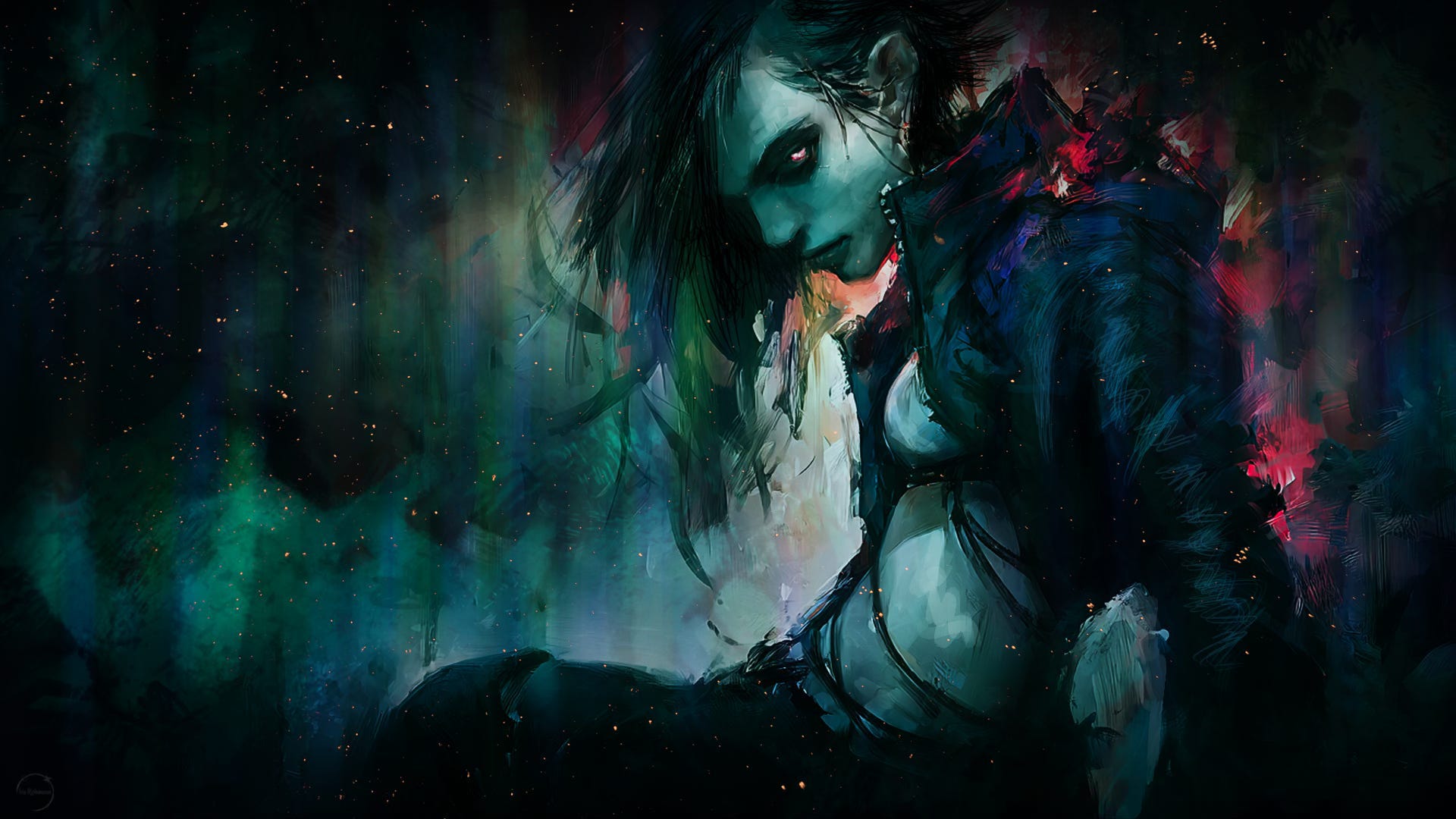
“I have been called many things across the centuries, though none of the names belonged to me for very long, and I stopped expecting them to. Witch. Ghost. Devil. Saint. Once, in Prague, a dying priest took my hand in the grey hour before dawn and called me an angel with tears running freely down his face, tears that had the particular quality of relief, of a man who has been afraid for a very long time and has finally, at the very end, been given permission to stop, I sat with him, held his hand and did not correct him, because what would have been the point, and because the kindness cost me nothing. Three days later he saw me again in full daylight, recovered enough to stand and to remember that he had a role to perform, then, he tried to have me burned. Humans do that. They adore mysteries right until the moment the mystery begins looking back at them, and then they reach for fire. I no longer correct them, and I no longer hold it against them either, not exactly, because names are temporary things and I have lived long enough to understand that human beings carve labels into reality not out of cruelty but out of the particular terror of standing too close to something they cannot measure or contain. I understand. I was made of the same clay. I remember what it felt like to need the world to stay still long enough to name it. But now, I am writing this… as a memory, as a testimony.”
Before.
Though that word has become almost meaningless to me now, a sound I make in the direction of something I can no longer quite see.
I live above a city that has forgotten the stars, which is to say I live above a city like any other city in this century, the sky hanging above it every night immense and patient and largely unobserved, while below it the people move through their illuminated corridors with the particular urgency of creatures being pursued by something they cannot name and therefore cannot face. Perhaps they are. I watch them from the broken window of my apartment, which I have not repaired because the open frame gives me something that glass would take away, the unmediated sense of the city breathing beneath me, and because I stopped caring about the cold a very long time ago.
Tonight rain had covered the streets in silver and the headlights of passing cars smeared themselves across the wet asphalt in long dissolving streaks. Eleven days ago, was the last time I was fed.
No… not blood. People always assume I consume blood, and I have never entirely understood why, whether it is the old stories or simply the particular shape of human anxiety about what something like me might want from them. What I consume is more difficult to explain and perhaps more intimate than blood, which is only a substance, only a carrier, whereas what I take from them is the thing itself. Regret. Longing. The dense specific ache of unfinished things. I can feel it in the people who pass beneath my window, the little fractures they carry under their coats and their skin, the quiet griefs and the half-healed wounds and the things they meant to say to someone who is no longer there to hear them. Everyone carries these. I do not steal them. I absorb a little of the weight and carry it myself, which perhaps once was my purpose or perhaps was not, because memory after so many centuries is not what it was, has become less like remembering and more like reading books you encountered long ago, books about someone else’s life, someone you recognize distantly the way you might recognise a face from a dream.
I only know there was light, once. There were others. There were, I think, wings, though sometimes I wonder if wings are simply another story I told myself enough times that it calcified into something that feels like memory… but may only be longing wearing memory’s clothes.
I was sitting at the broken window with the rain coming in at an angle and the city’s accumulated grief moving through me like a slow tide when I felt it. Not heard. Felt. A sensation that traveled through my chest like the sudden knowledge of ice beneath water, like the specific quality of recognition that has nothing to do with the face or the name but goes deeper than both, down to whatever it is in me that predates all the names I have been given and all the ones I have given myself.
Presence.
I knew before I looked down. I stood slowly and looked down anyway, because some things you make yourself do with your eyes open, right there across the street beneath the flickering sign of an all-night café, standing completely motionless in the rain with a dark coat and black hair gone darker and heavy with water, was someone looking up at my window with eyes that were not human, not because they blazed or carried some obvious supernatural fire, but because I knew them, not the face, not even the person exactly, but the feeling that emanated from them the way heat emanates from stone that held the sun all day, the feeling of standing beside something ancient enough to remember the same sky, the same before, the same light I can no longer quite bring myself to look at directly even in memory.
He looked up at me. After a moment, he smiled, and the smile was not warm and not cruel but carried in it something I recognized as the expression of someone who has been searching for a very long time, and finally found what they were looking for, but is not entirely certain they are glad for it.
Then, he whispered something I could not understand across the rain, the distance and the noise of the city, but I knew the words anyway, the way you know certain things not because you heard them but because they have been true for so long they have become part of the texture of the air.
“You left us.”
He came up without being invited, which he has always been able to do, which is one of the things about him that always irritated me, that sense of having access, of moving through the world as though the world’s ordinary barriers were a courtesy extended to others. I heard his steps on the stair and did not turn from the window. When he entered he said nothing for a moment, only stood in the doorway of my broken apartment with the rain-smell still on him and looked at me with those eyes that have seen everything and recorded all of it in that immaculate ledger he keeps, every word spoken under heaven and beneath it, every name given and taken away.
“Lilith,” he said.
And that was when something shifted in me, something that had been accumulating for eleven days and centuries before that, something that lives below the irony and the long patience and the careful distance I have cultivated across all the years of watching human things rise and collapse and rise again, something that is older than all of that, older than the names, older than the stories, something that was there at the very beginning when I was made of the same essence and breathed the same first breath and looked at what was being asked of me and said no, not because I was proud, not because I was ambitious, not because I wanted what he had, but simply because it was wrong, because the thing being asked was wrong, I knew it, and I said so, and for that, for the precise and simple act of saying so, I was unmade from the story entirely.
I turned from the window.
“Do not say my name,” I said, and my voice came out in a register I had not used in a very long time, something that predated everything I had taught myself to be, all the careful centuries of irony and distance… and the long slow work of making peace with exile, and what came out instead was older, harder and had no interest in being reasonable.
“Do not come into this room and say my name as though you have been looking for me out of something resembling care, when what you have been doing, what all of you have been doing, is precisely the opposite of looking for me, for centuries, for millennia, every scribe and scholar and rabbi and priest reaching for his pen to write me further out of the record, further into the dark, further into the category of monster, and you above all of them, Metatron, you who hold the pen that matters, you who stand beside the throne and record what is true and what will be remembered, you stood there and you watched it happen and you wrote it down.”
“Lilith…”
“They called me a killer of children,” I said.
“They took the one thing I am not, the one transgression I have never committed in all the centuries I have moved through this world, and they made it my defining attribute, my essence, my name, they told mothers to hang amulets against me above their children’s beds, they turned me into the fear that lives in the dark at the edge of sleep, and every woman who refused something she was told to accept, every woman who said I was made of the same earth and I will not turn over, they called her Lilith, they called her ME, and by calling her me, they put her outside the human, outside the protected, outside the category of beings whose suffering requires a response.”
I stopped. Outside, the rain had intensified and the city noise rose with it, the sound of ten thousand people moving through their lives with their grief tucked under their arms.
“And you recorded it. You, who were there. You, who knows what actually happened. YOU kept the ledger and let them fill it with lies but said nothing at all…”
He opened his mouth. I watched him decide against whatever he had been about to say.
“And now you come here, to this room above a city full of people I have been absorbing grief from for so long because they have nowhere to put it, because the structures that once gave human suffering a place to go, have been dismantled or corrupted or sold, and you stand in my doorway with rain in your hair and say “you left us”, as though I departed, as though I made a choice to go, as though there was somewhere to go to, as though what happened was a leaving and not an erasure, not a systematic and patient and centuries-long project of making me into something so monstrous that the original argument, the original simple wrong thing that was being asked of me, would never have to be answered, would never have to be looked at directly, because there would be nothing left of me that anyone could take seriously enough to hear.”
The room was very quiet. Metatron stood in the doorway, he did not speak… his face had the look of someone who came prepared for one kind of conversation and finds himself in another kind entirely.
“I did not leave,” I said. “I was written out. There is a difference, and you of all beings know it, because you are the one who holds the records, and the records are wrong, and you know they are wrong, you have always known.”
He was quiet for a long time. The rain moved through the broken window and the city breathed beneath us and somewhere below a car horn sounded once and then was silent.
“You are right,” he said finally, and his voice had lost whatever it had carried when he arrived, the slight formality, the sense of someone executing a long-considered purpose. What was left was something older and tireder and more honest. “You are right about all of it. Every word.”
I waited.
“But I alone,” he said, stopped, and began again. “What men did with what was given to them… I recorded it. I witnessed it. But I could not…” He stopped again. The sentence did not seem to want to be finished. “I alone cannot change what men did. What men do. What they will continue to do with the stories they are given.”
I looked at him for a long time. Outside the rain continued its work on the city, the patient dissolving work of water on stone, on asphalt, on all the surfaces humans construct to keep the elements at a manageable distance.
“I know,” I said.
And I did know. I had been knowing it for too long at this broken window, absorbing the weight of it from the people below, the specific grief of living in a world where the structures meant to hold human suffering have become inadequate or absent, where there is no longer anywhere to put the weight, where even the archivist of heaven stands in a doorway in a wet coat and tells you “he could not change it alone.”
I knew.
That was the oldest thing about me, the thing that had survived all the names and the centuries and the systematic project of my erasure, the knowing, the same knowing that had looked at what was being asked at the very beginning and said NO, not because I wanted power but because I could see clearly what the thing being asked would cost, not just me, but everyone who came after, every woman made of the same essence who would spend the rest of human history being told she was made of something lesser, something subordinate, something that required the shaping hand of another to be complete.
I had seen it then. I see it now.
Metatron stood in my doorway with rain drying in his hair and the weight of an accurate but insufficient admission between us, and I turned back to the window, and the city moved below us in all its forgetting, I did not tell him to leave, and he did not go, and neither of us spoke, because there are some true things that sit between two ancient beings in a room above a rainy city and do not require anything further said about them.
I had not left.
I had simply never been allowed back in.
And the difference between those two things is the whole of the story, every word of it, written and unwritten both.
The rain in Metatron’s hair..! I hate how he arrives damp and solemn, like weather can soften a ledger that had centuries to tell the truth...
This feels incredibly restrained in a way that makes the grief heavier.
“The silence sat beside us” and “you left us / before we understood / how much of the house / was held together by your breathing” both carry that quiet devastation without forcing it.
There’s such tenderness in the pacing of this piece, Sara. It feels less like explanation and more like living inside the absence itself.